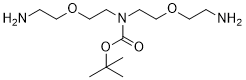
ATT 565 Azide is an orange fluorescent dye designed for click chemistry, biomolecular labeling, and fluorescence imaging research. It features a rhodamine-based fluorophore with a reactive azide group that enables selective conjugation with alkyne-functionalized molecules. Its strong fluorescence and photostability support high-resolution microscopy, molecular detection, and biological imaging. Additionally, the azide functionality enables covalent attachment to compatible proteins, peptides, oligonucleotides, and other biomolecules through bioorthogonal click chemistry.
Key Features and Benefits
- Orange Fluorescent Dye: Exhibits typical absorption near 554 nm and emission near 577–578 nm, supporting fluorescence detection in the orange spectral region.
- Reactive Azide Functional Group: Provides a chemical handle for selective conjugation with suitable alkyne-functionalized molecules.
- Click Chemistry Compatibility: Supports copper-catalyzed azide–alkyne cycloaddition (CuAAC) and strain-promoted azide–alkyne cycloaddition (SPAAC) reactions.
- Rhodamine-Based Fluorophore: Features strong optical absorption, high fluorescence quantum yield, and good photostability for molecular labeling applications.
- Stable Triazole Formation: Enables covalent conjugation through stable triazole linkages with compatible alkyne-containing compounds.
- Biomolecular Labeling Capability: Specifically supports fluorescent modification of proteins, peptides, oligonucleotides, and other suitably functionalized biomolecules.
- Water and Organic Solvent Compatibility: Offers good solubility in water, DMSO, and DMF, supporting various labeling and analytical workflows.
- High-Resolution Imaging Compatibility: Supports fluorescence microscopy and single-molecule detection using suitable excitation and emission settings.
- Research Versatility: Additionally, provides a fluorescent building block for chemical biology, molecular probe development, and bioconjugation research.
Applications
- Click Chemistry Bioconjugation: Enables covalent attachment of fluorescent labels to alkyne-functionalized biomolecules through compatible CuAAC or SPAAC reactions.
- Fluorescent Protein Labeling: Supports modification of proteins containing suitable terminal or strained alkyne groups.
- Peptide Labeling: Facilitates preparation of fluorescent peptide conjugates for biochemical assays and molecular interaction studies.
- Fluorescence Microscopy: Specifically supports visualization of labeled biomolecules using compatible orange fluorescence detection systems.
- Oligonucleotide Labeling: Enables conjugation with alkyne-functionalized DNA and RNA molecules for nucleic acid research.
- Single-Molecule Detection: Supports fluorescence-based investigation of individual labeled molecules using suitable high-sensitivity imaging systems.
- High-Resolution Imaging: Provides a photostable fluorescent label for advanced microscopy applications under validated experimental conditions.
- Bioorthogonal Labeling: Additionally, facilitates selective molecular labeling through compatible azide–alkyne cycloaddition chemistry.
- Fluorescent Molecular Probe Development: Enables preparation of specialized fluorescent probes for molecular detection, cellular imaging, and chemical biology research.
Storage and Handling
- Storage: Store at −20°C in a dry, tightly sealed container, protected from light and moisture. Additionally, minimize temperature fluctuations to preserve dye stability.
- Handling: Use clean, dry equipment and appropriate protective gear. Prepare solutions in compatible solvents, such as water, DMSO, or DMF, after confirming solubility.
- Click Chemistry Conjugation: React the azide group with suitable terminal alkynes using CuAAC or strained alkynes using SPAAC chemistry. Subsequently, optimize reaction conditions while minimizing unnecessary light exposure.
- Purification and Analysis: Remove unreacted dye using chromatography or other suitable purification methods. Evaluate conjugation efficiency, fluorescence intensity, and product purity using HPLC, LC-MS, or appropriate analytical techniques.
ATT 565 Azide combines orange fluorescence with reactive azide functionality for selective molecular labeling and bioconjugation. Its rhodamine-based fluorophore supports high-sensitivity fluorescence detection, while the azide group enables covalent attachment to compatible alkyne-containing molecules. Therefore, it provides a versatile labeling reagent for click chemistry, protein and peptide modification, fluorescence microscopy, and chemical biology research.
AxisPharm offers 5000+ PEG Linkers with high purity. Different kinds of PEG Reagents may be available by custom synthesis.