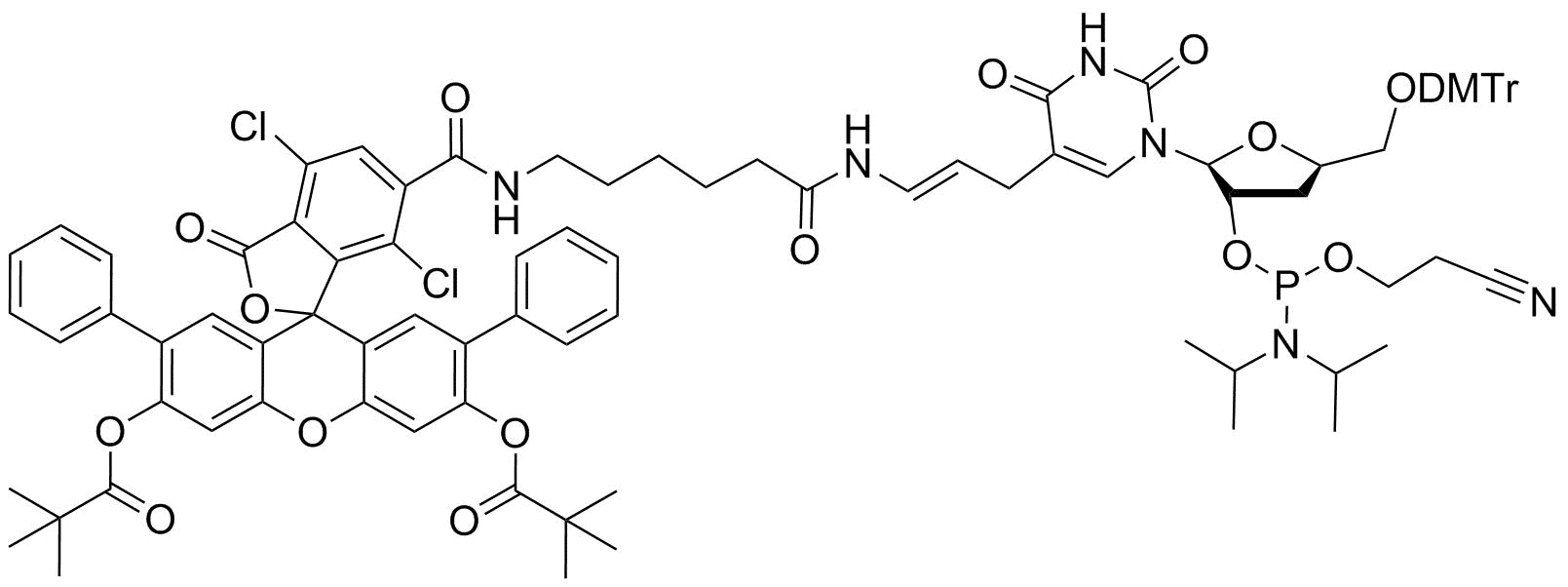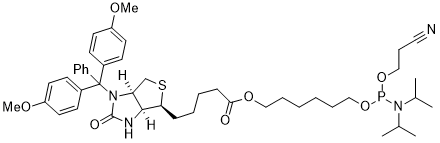



TFA-aminoallyl-2′-deoxyuridine Phosphoramidite provides a protected aminoallyl-functionalized deoxyuridine building block for DNA oligonucleotide synthesis and post-synthetic bioconjugation and specifically combines a 2′-deoxyuridine nucleoside with a trifluoroacetyl (TFA)-protected aminoallyl group and reactive phosphoramidite functionality. This structure specifically supports site-specific incorporation of amino-reactive handles for fluorescent labeling, biomolecular conjugation, and modified DNA research.
Key Features and Benefits
- Aminoallyl-Modified Deoxyuridine: Features an aminoallyl substituent on the uracil nucleobase specifically for introducing functional handles into synthetic DNA sequences.
- TFA-Protected Amino Group: Protects the aminoallyl functionality during oligonucleotide synthesis and specifically enables subsequent generation of a reactive primary amine.
- Reactive Phosphoramidite Functionality: Supports incorporation into growing DNA oligonucleotide chains specifically using compatible solid-phase synthesis protocols.
- Site-Specific Functionalization: Enables controlled placement of aminoallyl-modified deoxyuridine residues at selected positions within synthetic DNA.
- Post-Synthetic Labeling Capability: Provides a primary amine after suitable deprotection specifically for conjugation with NHS esters and other amine-reactive reagents.
- Fluorescent Dye Compatibility: Supports attachment of compatible fluorescent dyes to amino-functionalized DNA for imaging and detection research.
- Bioconjugation Versatility: Enables preparation of DNA conjugates containing dyes, affinity tags, and other functional molecules.
- Automated DNA Synthesis Compatibility: Supports incorporation using compatible automated oligonucleotide synthesizers and validated phosphoramidite chemistry.
- Modified Nucleobase Design: Introduces functional groups through the uracil nucleobase while retaining the deoxyribose-phosphate backbone.
Applications
- Modified DNA Oligonucleotide Synthesis: Supports site-specific incorporation of aminoallyl-functionalized deoxyuridine into synthetic DNA sequences.
- Fluorescent DNA Labeling: Enables conjugation of fluorescent dyes to deprotected aminoallyl groups for nucleic acid detection and imaging.
- DNA Probe Development: Supports preparation of functionalized oligonucleotide probes for hybridization and molecular recognition studies.
- Post-Synthetic Bioconjugation: Provides reactive amino groups for coupling with NHS ester-functionalized dyes, biotin derivatives, and other molecules.
- Biotinylated DNA Preparation: Enables attachment of suitable biotin reagents for affinity capture and streptavidin-binding studies.
- DNA Hybridization Research: Supports investigation of modified nucleobases and their effects on duplex formation and sequence recognition.
- Molecular Imaging Research: Useful for developing fluorescently labeled DNA constructs for microscopy and imaging applications.
- Nucleic Acid Biosensors: Supports preparation of functionalized DNA probes for fluorescence-based and affinity-based detection platforms.
- DNA Nanotechnology: Enables introduction of chemical attachment sites into DNA nanostructures and functional molecular assemblies.
Storage and Handling
- Storage: Store at −20°C in a dry, tightly sealed container under an inert atmosphere when possible, unless otherwise specified. Protect from moisture, excessive heat, and prolonged light exposure.
- Handling: Handle under anhydrous conditions to preserve phosphoramidite reactivity. Prepare solutions using dry, compatible solvents, such as anhydrous acetonitrile, when appropriate. Minimize atmospheric moisture exposure and use freshly prepared solutions for oligonucleotide synthesis. Apply validated deprotection conditions to remove the TFA protecting group while preserving oligonucleotide integrity. Following deprotection, conjugate the liberated amino group with suitable amine-reactive labeling reagents.
TFA-aminoallyl-2′-deoxyuridine Phosphoramidite combines protected aminoallyl functionality with phosphoramidite chemistry for controlled DNA modification and specifically supports fluorescent labeling, post-synthetic bioconjugation, functionalized DNA probe development, nucleic acid biosensors, and DNA nanotechnology research.
AxisPharm offers 5000+ PEG Linkers with high purity. Different kinds of PEG Reagents may be available by custom synthesis.