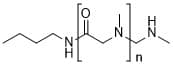
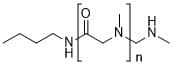
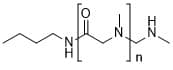
Polysarcosine-200 is a hydrophilic polypeptoid composed of approximately 200 sarcosine repeat units. It offers strong water compatibility, low nonspecific interactions, and a protein-resistant polymer platform specifically for biomaterial and drug-delivery research.
Key Features and Benefits
- Polysarcosine Structure: Consists of repeating N-methylglycine units that form a hydrophilic polypeptoid backbone.
- 200 Repeat Units: Provides approximately 200 sarcosine units for applications requiring an extended hydrophilic polymer chain.
- High Hydrophilicity: The polysarcosine backbone interacts especially strong with water and supports aqueous compatibility.
- Low Nonspecific Interactions: Polysarcosine can reduce nonspecific protein interactions when incorporated into suitable materials and surfaces.
- Protein-Resistant Properties: The hydrated polymer chain supports development of low-fouling coatings and functional biomaterials.
- PEG Alternative: Provides a non-PEG hydrophilic polymer option specifically for polymer modification, surface engineering, and delivery research.
- Polypeptoid Backbone: N-substitution distinguishes polysarcosine from conventional polypeptides and contributes to its characteristic solution properties.
- Versatile Polymer Platform: Supports conjugation, formulation, surface modification, and development of advanced polymer systems.
Applications
- Drug Delivery: Supports development of hydrophilic polymer systems, carriers, and delivery platforms.
- Surface Modification: Provides a hydrophilic polymer layer for modifying particles, surfaces, and biomaterials.
- Low-Fouling Materials: Supports development of materials designed to reduce nonspecific protein interactions.
- Nanoparticle Functionalization: Enables hydrophilic modification of compatible nanoparticles and polymeric delivery systems.
- Polymer Conjugation: Supports development of polysarcosine-containing block copolymers and functional polymer architectures.
- PEG Alternative Research: Provides a hydrophilic polypeptoid platform for studying alternatives to PEG-based materials.
- Biomaterial Research: Supports development of hydrophilic coatings, polymer conjugates, nanoparticles, and related biomaterials.
Storage and Handling
- Storage: Store at –20 °C in a tightly sealed container under dry conditions.
- Handling: Protect from moisture and excessive heat. Allow the material to reach room temperature before opening to minimize condensation.
Polysarcosine 200 provides a hydrophilic polypeptoid platform with approximately 200 sarcosine repeat units and specifically supports low-fouling materials, surface modification, nanoparticle functionalization, drug-delivery research, and biomaterial development.
AxisPharm offers 5000+ PEG Linkers with high purity. Different kinds of PEG Reagents may be available by custom synthesis.