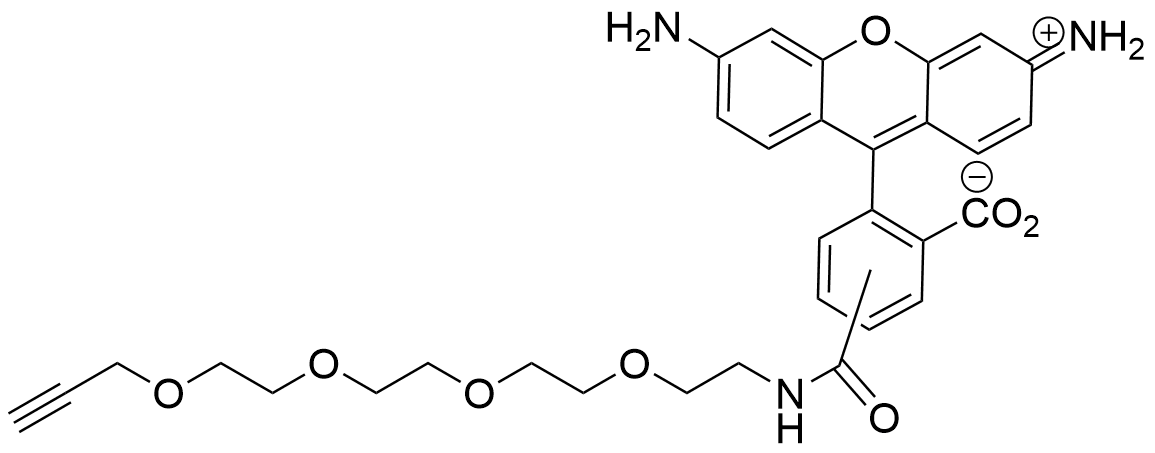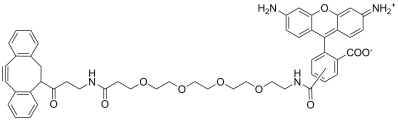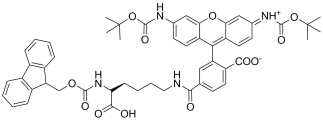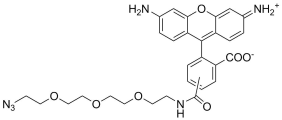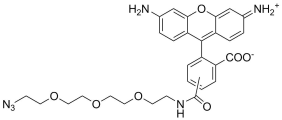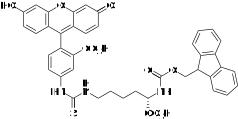


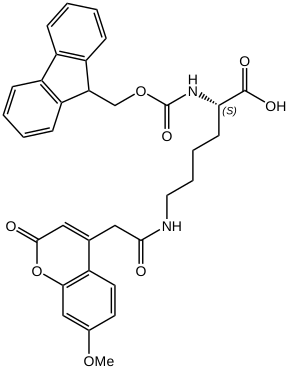

Fmoc-L-Lys(Dnp)-OH is a protected lysine derivative designed for solid-phase peptide synthesis (SPPS), fluorescence quenching, and protease substrate development. It features an Fmoc-protected α-amino group and a 2,4-dinitrophenyl (Dnp) group attached to the lysine side chain. The Fmoc group supports controlled peptide assembly, while the Dnp moiety acts as a fluorescence quencher in suitable peptide-based assays. Additionally, this building block enables site-specific incorporation of quenching groups into synthetic peptides for enzyme activity studies, FRET-based assays, and chemical biology research.
Key Features and Benefits
- Fmoc-Protected Amino Acid: Features an Nα-Fmoc-protected L-lysine structure compatible with standard solid-phase peptide synthesis protocols.
- Dinitrophenyl Quenching Group: Contains a 2,4-dinitrophenyl group that functions as a fluorescence quencher when paired with suitable fluorophores.
- Side-Chain Functionalization: Provides an Nε-Dnp-modified lysine residue for site-specific incorporation into peptide sequences.
- Solid-Phase Synthesis Compatibility: Supports peptide chain assembly through established Fmoc deprotection and amino acid coupling procedures.
- Fluorescence Quenching Capability: Specifically enables development of internally quenched fluorescent peptide substrates for monitoring enzymatic cleavage.
- FRET-Based Assay Compatibility: Supports preparation of peptide substrates containing compatible fluorophore–quencher pairs for fluorescence-based detection.
- Protease Substrate Development: Enables synthesis of modified peptide substrates for investigating protease activity and substrate specificity.
- Covalent Dnp Attachment: Maintains the Dnp group on the lysine side chain through a stable aromatic amine linkage under compatible synthesis conditions.
- Biochemical Research Versatility: Additionally, supports enzyme kinetics, peptide labeling, fluorescence quenching, and molecular interaction studies.
Applications
- Solid-Phase Peptide Synthesis: Enables incorporation of Dnp-modified lysine residues into synthetic peptides using compatible Fmoc-based SPPS protocols.
- Fluorescence Quenching Assays: Supports preparation of peptide substrates containing Dnp quenchers for fluorescence-based biochemical detection.
- Protease Activity Assays: Facilitates development of internally quenched fluorescent substrates for monitoring protease-mediated peptide cleavage.
- FRET-Based Peptide Substrates: Specifically supports synthesis of peptides containing Dnp quenchers paired with suitable fluorescent donors, such as Mca.
- Enzyme Kinetics Research: Enables investigation of protease activity, substrate specificity, and cleavage rates using fluorescence-based assays.
- Peptide Labeling Research: Provides a functionalized amino acid building block for introducing Dnp groups at defined peptide positions.
- Molecular Interaction Studies: Supports investigation of peptide interactions and conformational changes using compatible fluorescence quenching techniques.
- Fluorogenic Substrate Development: Additionally, enables preparation of peptide probes that produce increased fluorescence following enzymatic cleavage.
- Chemical Biology Research: Supports development of functionalized peptide substrates for studying enzyme mechanisms and biomolecular interactions.
Storage and Handling
- Storage: Store at −20°C in a dry, tightly sealed container, protected from moisture and light, unless product-specific instructions indicate otherwise. Additionally, minimize temperature fluctuations to preserve reagent integrity.
- Handling: Use clean, dry equipment and appropriate protective gear. Prepare solutions in compatible peptide synthesis solvents, such as DMF or NMP, after confirming solubility.
- Peptide Synthesis: Incorporate into peptide sequences using compatible Fmoc-based SPPS protocols. Subsequently, optimize coupling, cleavage, and deprotection conditions to preserve Dnp functionality.
- Fluorescence Analysis: Pair Dnp-containing peptides with suitable fluorescent donors for quenching assays. Evaluate peptide purity, cleavage efficiency, and fluorescence response using HPLC, LC-MS, or appropriate analytical methods.
Fmoc-L-Lys(Dnp)-OH combines Fmoc-based peptide synthesis compatibility with a covalently attached dinitrophenyl quenching group for specialized peptide applications. Its Dnp functionality supports fluorescence quenching, protease substrate development, and enzyme activity measurements. Therefore, it provides a versatile building block for FRET-based peptide assays, fluorescence-based detection, and chemical biology research.
AxisPharm offers 5000+ PEG Linkers with high purity. Different kinds of PEG Reagents may be available by custom synthesis.