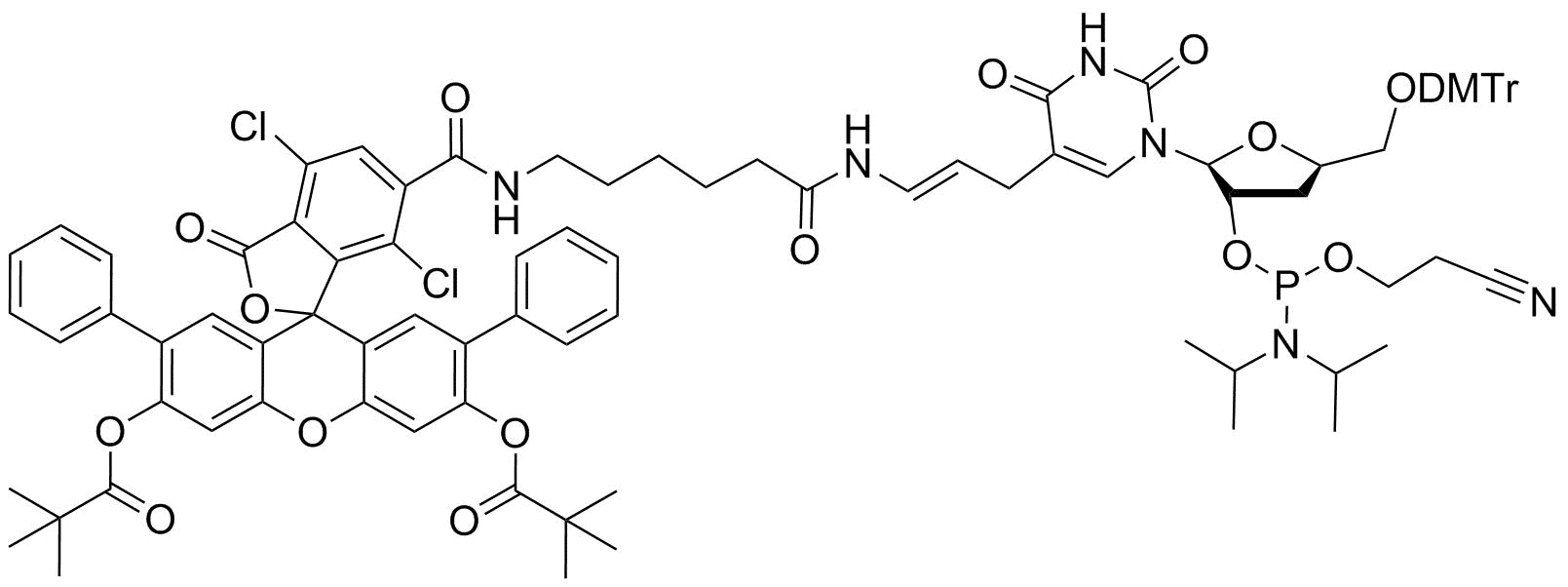



Bz-rA Phosphoramidite (Benzoyl-Protected Adenosine Phosphoramidite) provides a protected adenosine building block for solid-phase RNA oligonucleotide synthesis and specifically features benzoyl protection of the adenine amino group and a reactive phosphoramidite functionality for nucleotide coupling. This reagent specifically supports controlled RNA chain assembly, sequence-specific synthesis, and the development of modified RNA oligonucleotides.
Key Features and Benefits
- Benzoyl-Protected Adenine: Protects the exocyclic amino group of adenine during oligonucleotide synthesis, helping minimize unwanted side reactions.
- Adenosine Building Block: Provides the adenosine nucleotide component for incorporating adenine residues into synthetic RNA sequences.
- Reactive Phosphoramidite Group: Enables efficient nucleotide coupling during solid-phase oligonucleotide synthesis under suitable activation conditions.
- RNA Synthesis Compatibility: Supports established phosphoramidite-based RNA synthesis workflows using compatible protecting groups and deprotection procedures.
- Controlled Nucleotide Incorporation: Enables stepwise addition of adenosine residues during sequence-directed RNA oligonucleotide assembly.
- Protecting Group Strategy: Uses benzoyl protection to preserve adenine functionality throughout the coupling, oxidation, and capping steps.
- Solid-Phase Synthesis Applications: Supports automated and manual RNA synthesis using compatible solid supports and phosphoramidite chemistry.
- Sequence Design Versatility: Enables preparation of RNA oligonucleotides with defined adenine positions for molecular biology and biochemical research.
- Synthetic RNA Development: Provides a nucleotide building block for investigating RNA structure, function, and chemically modified oligonucleotide designs.
Applications
- RNA Oligonucleotide Synthesis: Supports incorporation of protected adenosine residues into RNA sequences through solid-phase phosphoramidite chemistry.
- Automated RNA Synthesis: Enables use in compatible automated oligonucleotide synthesizers for controlled, sequence-specific RNA chain assembly.
- Custom RNA Sequence Development: Supports preparation of research-grade RNA oligonucleotides with defined nucleotide sequences and compositions.
- siRNA Research: Provides an adenosine building block for synthesizing RNA strands used in experimental RNA interference studies.
- Antisense Oligonucleotide Research: Supports synthesis of RNA-containing oligonucleotides for investigating complementary nucleic acid interactions and gene regulation.
- RNA Structure Studies: Enables preparation of defined RNA sequences for investigating folding, secondary structure, and molecular interactions.
- RNA-Protein Interaction Research: Supports synthesis of RNA probes and oligonucleotides for studying RNA-binding proteins and recognition mechanisms.
- Modified RNA Development: Enables incorporation of adenosine residues into experimental RNA sequences containing compatible nucleotide modifications.
- Nucleic Acid Chemistry Research: Supports investigations of phosphoramidite coupling, protecting group strategies, and oligonucleotide synthesis optimization.
Storage and Handling
- Storage: Store at −20°C in a dry, tightly sealed container, protected from moisture and light. Follow product-specific storage instructions when available. Minimize repeated exposure to atmospheric humidity to preserve phosphoramidite reactivity.
- Handling: Handle using clean, dry equipment under moisture-controlled conditions. Prepare solutions in anhydrous acetonitrile or another validated synthesis solvent. Confirm solubility and compatibility with the selected oligonucleotide synthesis system.
- Use the phosphoramidite in solid-phase RNA synthesis with a compatible activator and coupling protocol. Optimize reagent concentration, coupling time, and synthesis conditions for the desired RNA sequence. Protect the reagent from moisture because phosphoramidite groups undergo hydrolysis.
- Maintain appropriate protecting group strategies throughout RNA chain assembly. The benzoyl group protects the adenine amino functionality during synthesis. Verify the reagent’s specific 2′-hydroxyl protecting group before selecting RNA deprotection conditions. Common RNA protection strategies include TBDMS and TOM, which require different processing conditions.
- Evaluate coupling efficiency, oligonucleotide integrity, and final RNA purity using appropriate analytical techniques. Apply compatible cleavage and deprotection procedures after synthesis. Remove residual reagents and protecting group byproducts before downstream applications. Confirm the phosphoramidite structure, protecting groups, and product specifications before use.
Bz-rA Phosphoramidite (Benzoyl-Protected Adenosine Phosphoramidite) provides a protected adenosine building block for controlled RNA oligonucleotide synthesis and specifically supports automated RNA synthesis, custom RNA sequence development, nucleic acid chemistry, and advanced RNA research.
AxisPharm offers 5000+ PEG Linkers with high purity. Different kinds of PEG Reagents may be available by custom synthesis.