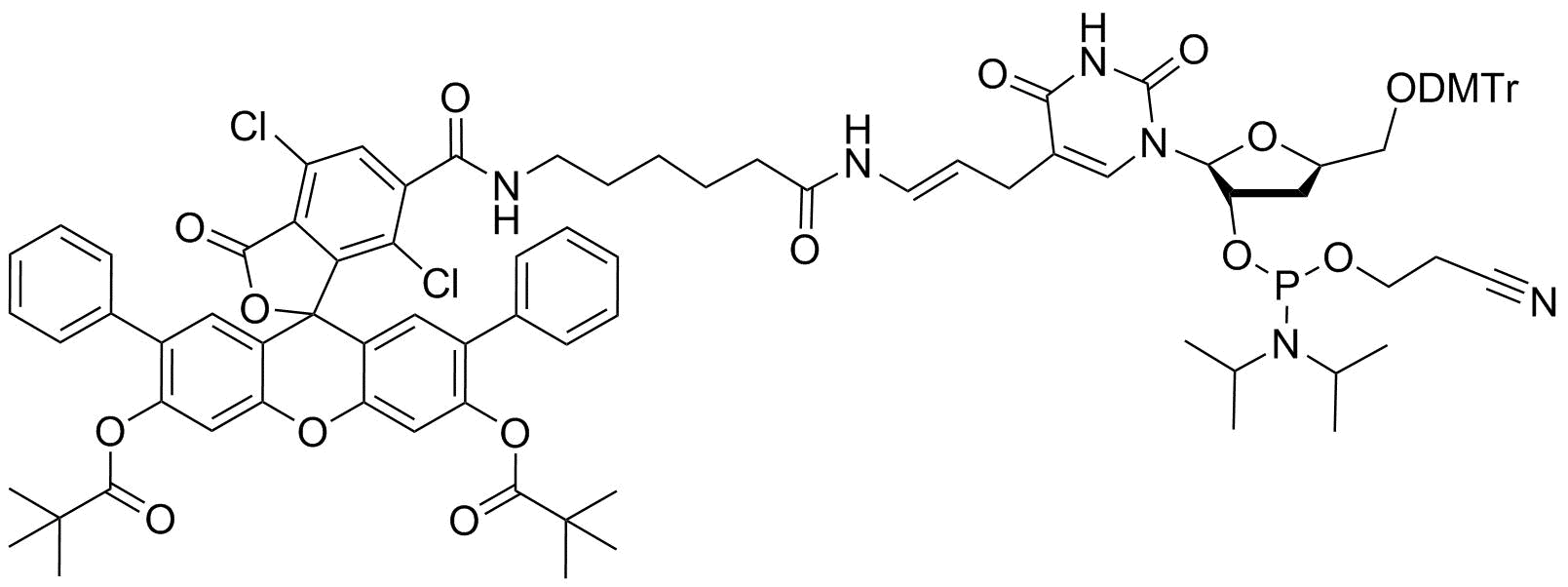
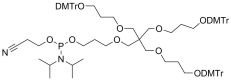
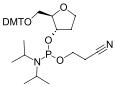
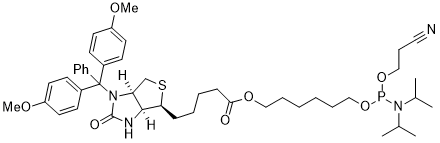
C3 Spacer Phosphoramidite provides a non-nucleosidic phosphoramidite building block for introducing three-carbon spacers into synthetic oligonucleotides and specifically enables incorporation of a short, flexible linker during automated solid-phase DNA synthesis without adding a nucleobase. Researchers use this reagent specifically to modify oligonucleotide spacing, investigate molecular interactions, and develop functional DNA probes.
Key Features and Benefits
- Three-Carbon Spacer: Introduces a short, non-nucleosidic C3 linker into synthetic oligonucleotides specifically for controlled molecular spacing.
- Phosphoramidite Functionality: Supports incorporation into growing oligonucleotide chains specifically using compatible phosphoramidite coupling chemistry.
- Non-Nucleosidic Structure: Provides a spacer segment without a nucleobase, allowing researchers to investigate backbone modifications and molecular separation.
- Flexible Linker Design: Introduces a short aliphatic segment that specifically provides conformational flexibility between adjacent oligonucleotide regions.
- Automated DNA Synthesis Compatibility: Supports integration into standard solid-phase oligonucleotide synthesis workflows with appropriate coupling conditions.
- Controlled Spacer Incorporation: Enables placement of C3 spacer units at selected positions within synthetic oligonucleotide sequences.
- Modified Oligonucleotide Design: Supports preparation of DNA constructs containing non-nucleotide linker regions for structural and functional studies.
- Molecular Spacing Control: Helps researchers investigate how short spacer segments influence oligonucleotide conformation and molecular interactions.
- Versatile Research Applications: Supports development of modified DNA probes, molecular recognition systems, and specialized oligonucleotide constructs.
Applications
- Oligonucleotide Synthesis: Enables incorporation of three-carbon spacer units into synthetic DNA sequences using phosphoramidite chemistry.
- DNA Probe Development: Supports preparation of modified oligonucleotide probes with controlled spacing between functional sequence regions.
- Molecular Spacer Incorporation: Introduces non-nucleosidic linker segments to separate adjacent nucleotide sequences or functional groups.
- DNA Structural Studies: Enables investigation of how C3 spacer modifications influence oligonucleotide conformation and molecular flexibility.
- Hybridization Research: Supports evaluation of spacer-dependent changes in oligonucleotide hybridization and target recognition.
- Modified DNA Constructs: Enables synthesis of oligonucleotides containing internal non-nucleotide segments for specialized research applications.
- Molecular Recognition Studies: Supports investigation of spatial relationships between oligonucleotide regions involved in molecular binding.
- Biosensor Development: Enables preparation of modified DNA components for nucleic acid-based sensing and detection systems.
- Synthetic Nucleic Acid Research: Supports development and characterization of oligonucleotides containing non-natural backbone modifications.
Storage and Handling
- Storage: Store at −20°C in a dry, tightly sealed container under an inert atmosphere when possible, unless otherwise specified. Protect from moisture, excessive heat, and prolonged exposure to light to maintain phosphoramidite stability.
- Handling: Handle under anhydrous conditions using dry solvents and equipment. Dissolve in anhydrous acetonitrile or another compatible solvent according to the synthesis protocol. Incorporate the reagent using appropriate phosphoramidite coupling and activation conditions. Optimize coupling time and reagent concentration for the synthesis platform. Follow validated oxidation, deprotection, and purification procedures suitable for the specific spacer structure.
C3 Spacer Phosphoramidite provides a convenient building block for introducing short, non-nucleosidic spacers into synthetic oligonucleotides and specifically supports modified DNA synthesis, probe development, molecular spacing studies, hybridization research, and nucleic acid-based biosensor development.
AxisPharm offers 5000+ PEG Linkers with high purity. Different kinds of PEG Reagents may be available by custom synthesis.