

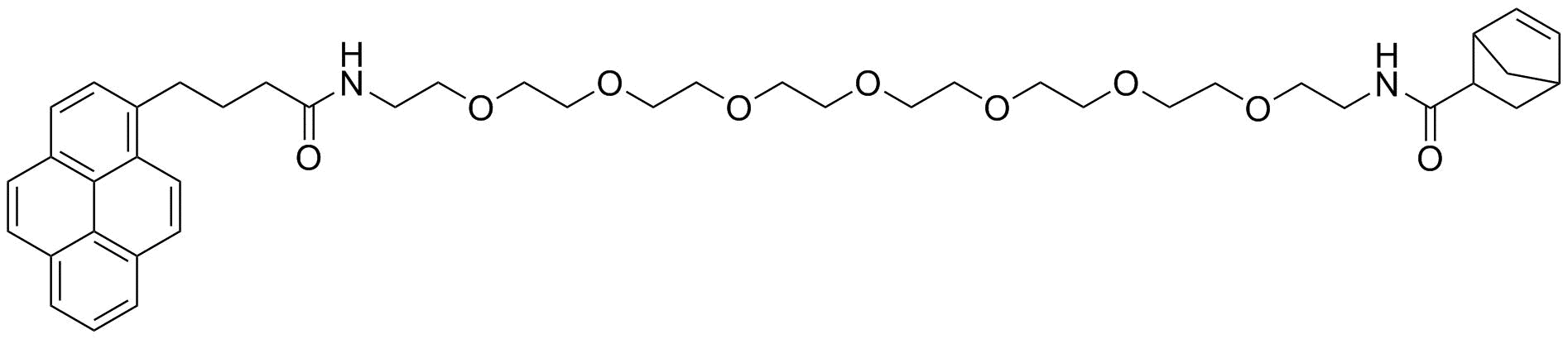


HyNic-PEG2-Propargyl is a heterobifunctional PEG linker with a HyNic hydrazine group at one end and a propargyl group at the other. A short PEG2 spacer joins these two reactive ends. As a result, the linker can connect carbonyl-containing molecules to azide-bearing compounds or biomolecules. Linkers of this type therefore suit carbonyl labeling and click chemistry workflows in bioconjugation research.
Key Features and Benefits
- Heterobifunctional Design: Two different reactive ends allow separate, stepwise conjugation of two distinct molecules.
- HyNic Hydrazine Group: The HyNic moiety reacts with aldehyde and ketone groups to form a hydrazone linkage.
- Propargyl Terminal Alkyne: In addition, the propargyl group reacts with azides through copper-catalyzed azide-alkyne cycloaddition (CuAAC).
- Stable Triazole Formation: The click reaction yields a stable triazole linkage between the linker and the azide partner.
- Reversible Hydrazone Linkage: In contrast, the carbonyl reaction forms a reversible hydrazone bond at the HyNic end.
- Hydrophilic PEG2 Spacer: The PEG spacer also increases the solubility of the resulting conjugate in aqueous media.
Applications
- Carbonyl Labeling: Because the HyNic group targets aldehydes and ketones, the linker serves as a tool for carbonyl labeling.
- Click Chemistry Bioconjugation: The propargyl group couples with azide-bearing compounds or biomolecules through CuAAC.
- Two-Step Crosslinking: Heterobifunctional linkers of this class can bridge a carbonyl-bearing molecule and an azide-bearing partner.
- Protein and Peptide Conjugation: HyNic linkers are widely used in protein and peptide conjugation once aldehyde or ketone groups are present.
- Surface Functionalization: Similarly, alkyne-PEG linkers are common for attaching molecules to azide-modified surfaces and materials.
Storage and Handling
- Storage: Store according to supplier specifications; as general practice, keep hydrazine reagents sealed, dry, and protected from light.
- Handling: Allow the vial to reach room temperature before opening, because this limits moisture condensation.
- Preparation: Prepare solutions shortly before use, and avoid acetone or other carbonyl solvents that react with hydrazines.
- Bioconjugation and Analysis: Run CuAAC with a copper(I) source and stabilizing ligand, then purify conjugates by chromatography or desalting and confirm by LC-MS.
In summary, HyNic-PEG2-Propargyl combines a carbonyl-reactive HyNic group, a short hydrophilic PEG2 spacer, and a terminal alkyne for copper-catalyzed click chemistry. Consequently, it supports carbonyl labeling, azide-alkyne bioconjugation, and two-step linker designs in research workflows.
AxisPharm offers 5000+ PEG Linkers with high purity. Different kinds of PEG Reagents may be available by custom synthesis.