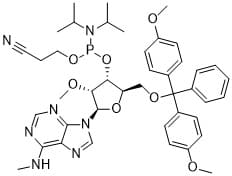


N6-Benzoyl-5′-O-DMT-2′-O-Hexadecyladenosine-3′-CE Phosphoramidite provides a lipid-modified adenosine building block for oligonucleotide synthesis and nucleic acid delivery research and specifically combines a hydrophobic C16 hexadecyl chain at the 2′-oxygen with N6-benzoyl base protection, 5′-O-dimethoxytrityl (DMT) protection, and a 3′-O-(2-cyanoethyl) phosphoramidite group. This reagent specifically enables site-specific incorporation of lipid functionality into synthetic oligonucleotides for investigating membrane interactions, molecular assembly, and delivery properties.
Key Features and Benefits
- 2′-O-Hexadecyl Modification: Introduces a hydrophobic C16 alkyl chain that supports research on lipid interactions, membrane association, and oligonucleotide delivery.
- N6-Benzoyl Protection: Protects the adenine exocyclic amino group during synthesis and allows removal through appropriate post-synthesis deprotection procedures.
- 5′-O-DMT Protection: Provides acid-labile protection of the 5′-hydroxyl group specifically for controlled, stepwise oligonucleotide synthesis.
- 3′-CE Phosphoramidite Group: Supports efficient nucleotide incorporation specifically through established phosphoramidite coupling chemistry under optimized synthesis conditions.
- Hydrophobic Lipid Functionality: Adds a long alkyl chain that can influence oligonucleotide solubility, molecular association, and interactions with lipid-based materials.
- Site-Specific Modification: Enables precise placement of hexadecyl-modified adenosine residues within compatible synthetic oligonucleotide sequences.
- Amphiphilic Molecular Design: Supports development of modified nucleic acids specifically containing hydrophilic phosphate backbones and hydrophobic alkyl functionality.
- Solid-Phase Synthesis Compatibility: Enables incorporation into compatible automated oligonucleotide synthesis workflows using validated coupling and deprotection protocols.
- Versatile Lipid Modification: Provides a specialized building block for lipid-functionalized oligonucleotides, nucleic acid nanotechnology, and delivery system research.
Applications
- Lipid-Modified Oligonucleotide Synthesis: Enables incorporation of C16 alkyl functionality into synthetic DNA and RNA analogs for biochemical and structural investigations.
- Nucleic Acid Delivery Research: Supports development of lipid-modified oligonucleotides for evaluating interactions with experimental delivery systems.
- Membrane Interaction Studies: Enables investigation of how hydrophobic alkyl modifications influence oligonucleotide association with lipid membranes and model bilayers.
- Antisense Oligonucleotide Research: Supports preparation of modified antisense sequences for studying cellular association, hybridization, and delivery behavior.
- siRNA Modification Studies: Enables exploration of lipid-functionalized RNA sequences and their compatibility with experimental gene-silencing systems.
- Amphiphilic Oligonucleotide Development: Supports synthesis of nucleic acid constructs containing hydrophobic and hydrophilic components for molecular self-assembly research.
- Lipid Nanoparticle Formulation Research: Enables evaluation of interactions between lipid-modified oligonucleotides and lipid-based nanocarriers.
- Nucleic Acid Nanotechnology: Supports development of lipid-functionalized oligonucleotide structures for nanoscale assembly and biomaterial applications.
- Oligonucleotide Structure-Property Studies: Facilitates comparison of modified and unmodified sequences to investigate solubility, duplex stability, molecular recognition, and lipid association.
Storage and Handling
- Storage: Store at −20°C in a tightly sealed container under dry, inert conditions, unless otherwise specified. Protect from moisture, excessive heat, and prolonged exposure to light. Allow the sealed container to reach room temperature before opening to minimize condensation.
- Handling: Prepare solutions using anhydrous acetonitrile or another validated solvent compatible with phosphoramidite synthesis. The hydrophobic C16 hexadecyl chain may influence solubility compared with conventional nucleoside phosphoramidites. Confirm complete dissolution before introducing the reagent into an automated synthesis system.
- Maintain anhydrous conditions throughout preparation and coupling because phosphoramidite groups are susceptible to moisture-induced hydrolysis. Use suitable activators and optimize coupling times according to the intended oligonucleotide sequence and synthesis platform.
- Apply validated cleavage and deprotection conditions compatible with the N6-benzoyl protecting group, the 2′-O-hexadecyl modification, and other modifications present in the oligonucleotide. Evaluate the final product using appropriate analytical techniques, such as HPLC and mass spectrometry.
N6-Benzoyl-5′-O-DMT-2′-O-Hexadecyladenosine-3′-CE Phosphoramidite combines protected adenosine chemistry with hydrophobic C16 alkyl functionality for specialized oligonucleotide synthesis and specifically supports lipid-modified nucleic acid development, membrane interaction studies, antisense and siRNA research, lipid nanoparticle investigations, and nucleic acid nanotechnology.
AxisPharm offers 5000+ PEG Linkers with high purity. Different kinds of PEG Reagents may be available by custom synthesis.